
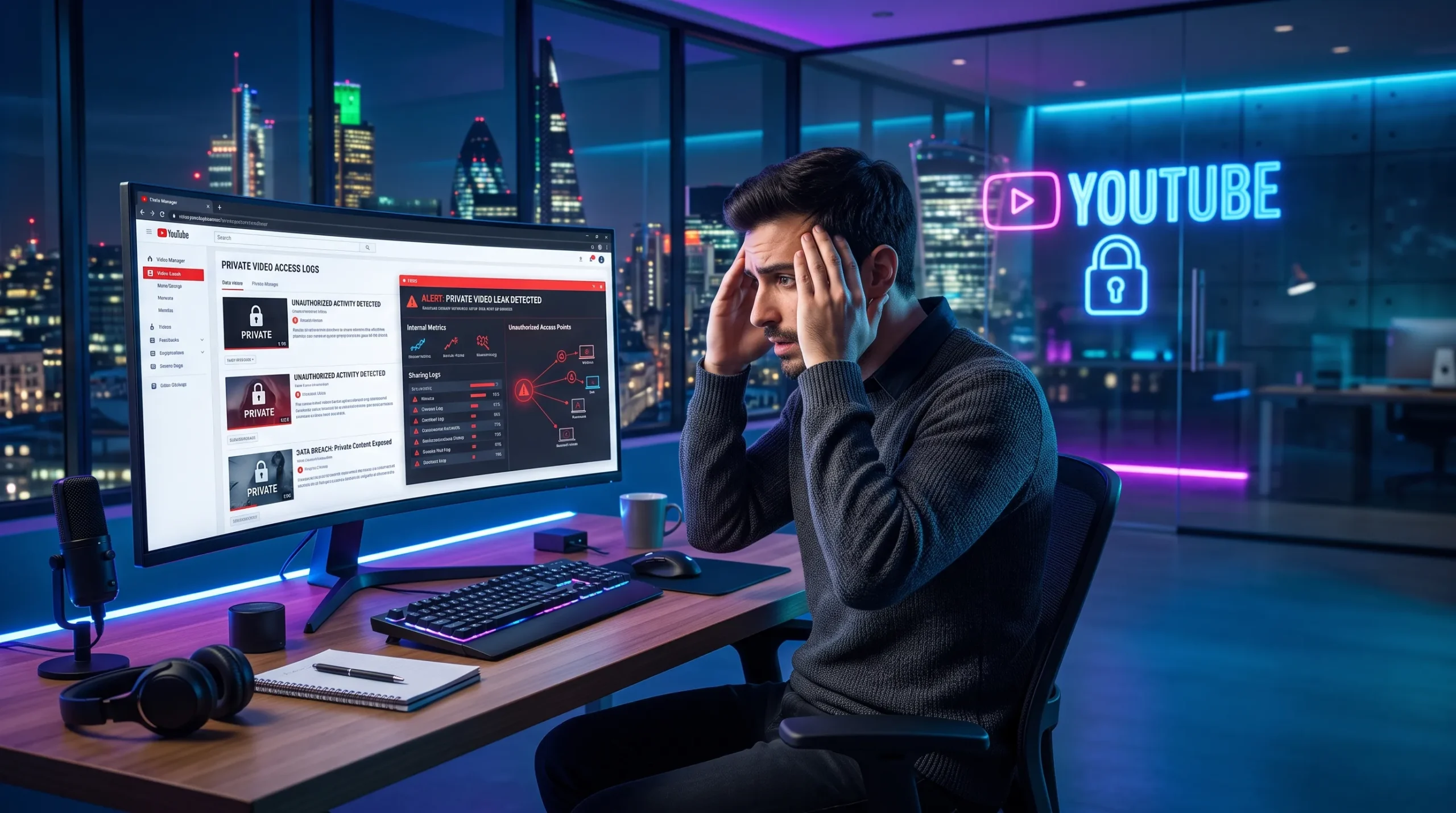
For modern digital publishers, media brands, and production studios, YouTube is far more than a public distribution network—it functions as a core staging ground for embargoed commercial campaigns, hardware reviews, and cinematic releases. However, an aggressive evolution in cybersecurity threats has compromised this workflow. The surge in YouTube private video leaks represents an existential threat across the media ecosystem, exposing unreleased assets to premature public disclosure, severe contractual penalties, and permanent brand damage long before scheduled premiere dates.
Unlike standard media piracy where public streams are ripped and redistributed, private video leaks represent direct breaches of pre-release staging infrastructure. As modern video teams increasingly adopt collaborative remote editing tools and third-party SaaS integrations from emerging creator economy startups reshaping video production, their attack surfaces expand exponentially. Maintaining rigorous video hosting security is now a foundational operational requirement for professional studios.
The Trend in Brief: The Rise of YouTube Private Video Leaks
Historically, content teams treated YouTube’s ‘Private’ and ‘Unlisted’ toggles as impenetrable vaults. A creator assumed that a video marked private was accessible exclusively to verified Google accounts, while unlisted videos remained hidden behind an unguessable alphanumeric URL string. In 2026, those legacy assumptions no longer hold up against automated threat actors.
The scale of pre-release exploitation has widened dramatically. High-budget gaming trailers, consumer electronics reviews, and investigative media packages are routinely ripped days or weeks before scheduled embargoes. Understanding the critical security distinctions between visibility settings is the first step in threat defense:
- Private Videos: Officially restricted to channel administrators and explicitly whitelisted Google accounts. Breaches of private videos require account credential theft, session cookie hijacking, or authorized API exploitation.
- Unlisted Videos: Accessible to anyone possessing the exact video link. While not indexed in YouTube search, these links are frequently intercepted via insecure Slack/Discord channels, unencrypted email chains, or automated web scrapers targeting video databases.
When unreleased content leaks, the economic damage is immediate. Creators forfeit first-mover traffic surges, violate legally binding non-disclosure agreements (NDAs), and lose sponsor confidence. Similar to how enterprises establish operational excellence with AI to eliminate workflow friction, content teams must formalize automated security hygiene across every pre-release staging pipeline.
Key Vulnerability Vectors Behind Video Leaks
The leak epidemic is rarely caused by a systemic vulnerability in Google’s core infrastructure. Instead, breaches stem from a combination of session hijacking, over-permissioned browser add-ons, third-party API exposure, and operational complacency:
1. Infostealer Malware and Session Cookie Hijacking
Hardware multi-factor authentication (MFA) and strong passwords cannot prevent ‘pass-the-cookie’ attacks. Cybercriminals launch targeted spear-phishing campaigns disguised as commercial sponsorship offers or PDF brand briefs. When opened, infostealer malware (such as Lumma, RedLine, or Vidar) extracts active session cookies from the creator’s browser. By injecting these authenticated tokens into an attacker’s browser, hackers bypass MFA completely and access YouTube Studio directly, downloading unreleased master files within minutes.
2. Compromised Browser Extensions
Creators frequently install third-party browser extensions for thumbnail testing, keyword analytics, and workflow automation. If an extension developer’s account is compromised, a malicious update can silently grant attackers permission to intercept active browser DOM data, capturing private video IDs and internal auth tokens as creators edit video metadata in YouTube Studio.
3. Vulnerabilities in Connected SaaS & OAuth Apps
To streamline editing workflows, production teams connect channel permissions to third-party scheduling, transcription, and multi-platform distribution software. As documented by research from cybersecurity intelligence forums like BleepingComputer, compromised OAuth tokens on third-party SaaS servers allow bad actors to query YouTube APIs and download staging assets without ever touching the creator’s physical machine.
4. The Fallacy of Security-Through-Obscurity
Sharing unlisted YouTube links across external editing teams, voiceover artists, and PR agencies introduces massive leakage risk. Links pasted into team messaging apps or public project management boards are routinely captured by browser scrapers and malicious bots that continuously scan web traffic for unlisted YouTube video patterns.
Threat Matrix: Comparing Leak Attack Vectors (2026)
The table below summarizes the primary threat vectors targeting pre-release video assets, detailing exploit mechanics and essential mitigation strategies:
| Threat Vector | Attack Mechanism | Impact on Pre-Release Media | Detection Difficulty | 2026 Recommended Mitigation |
|---|---|---|---|---|
| Session Token Theft | Infostealer malware via fake PDF briefs | Complete YouTube Studio dashboard takeover | High (bypasses standard MFA) | Hardware FIDO2 keys & isolated browser profiles |
| Rogue Extensions | Compromised Chrome extension updates | Silent DOM scraping of video IDs and tokens | Very High (runs inside trusted browser) | Zero-extension dedicated YouTube Studio profile |
| OAuth Token Exploit | Breaches in connected third-party SaaS tools | Direct API asset extraction and metadata read | Moderate (visible in Google Security audit) | Quarterly audit & revocation of stale OAuth apps |
| Unlisted Link Scraping | Automated bots scanning chat logs and boards | Public exposure of embargoed product videos | Low to Moderate | Strict DRM platforms (Frame.io) instead of YouTube |
| Insider Credential Leak | Shared passwords across freelance editors | Direct account download and unauthorized leak | Moderate | Role-based YouTube Studio channel permissions |
High-Profile Pre-Release Exploits and Industry Fallout
The real-world consequences of video leaks have shaken major entertainment studios and independent creators alike. The premature leak of the Grand Theft Auto VI trailer in late 2023 demonstrated how watermarked staging uploads can be intercepted, forcing developers into emergency public premieres that upend coordinated advertising rollouts.
Similarly, prominent tech channels such as Linus Tech Tips suffered full channel takeovers when employee workstations succumbed to session-stealing infostealers, exposing scheduled review videos to immediate compromise. In consumer hardware journalism, violating a manufacturer’s strict embargo due to a leaked private review leads to permanent blacklisting, forfeiture of review hardware, and devastating breach-of-contract lawsuits.
Essential Security Action Plan for Video Creators
Protecting pre-release content requires establishing a multi-layered defense architecture across hardware, software, and human operating procedures:
First, implement dedicated credential hygiene. Channel administrators should never use standard master passwords. Deploying audited password managers—such as those reviewed in our guide to the best Bitwarden alternatives for secure password management—coupled with hardware security keys (such as YubiKeys) drastically reduces unauthorized account access.
Second, isolate editing and production environments. Never open sponsorship contracts or unknown zip files on the same workstation that administers your primary YouTube channel. Content teams should also audit their creative tool stack by exploring verified AI tools for creators that respect strict data privacy, ensuring automated processing occurs within secure, audited environments.
Third, adopt secure review platforms for client and sponsor approvals. Replace unlisted YouTube links with purpose-built review platforms like Frame.io, which provide forensic visible watermarking with viewer email stamps, preventing anonymous leaks from external agency partners. Finally, review recommendations from the Cybersecurity and Infrastructure Security Agency (CISA) on phishing defense and token security to safeguard your broader digital infrastructure, mirroring principles from the modern startup infrastructure standards.
Frequently Asked Questions
What causes private YouTube video leaks?
Private video leaks primarily result from browser session cookie theft via infostealer malware, compromised third-party SaaS applications connected via OAuth, malicious browser extensions, and unauthorized employee or contractor access to channel dashboards.
Is an unlisted YouTube video secure for embargoed reviews?
No. Unlisted videos rely on security-through-obscurity. Anyone with the URL can stream the video. Unlisted links are frequently shared over unencrypted messaging apps, indexed by web scrapers, or intercepted by rogue browser extensions, making them unsuitable for confidential embargoes.
How do hackers bypass 2FA to access private YouTube videos?
Hackers use infostealer malware disguised as brand contracts or software updates to extract active browser session cookies. By importing these pre-authenticated tokens, attackers bypass passwords and two-factor authentication entirely, entering YouTube Studio as a recognized session.
Can creators be held legally liable if an embargoed video leaks?
Yes. Non-Disclosure Agreements (NDAs) signed with hardware manufacturers, movie studios, and game publishers often impose strict liability for premature leaks. Even if the leak stems from a cyberattack, creators can face contract termination, financial penalties, and loss of future access.
How can creators protect their YouTube channels from leaks in 2026?
Creators should use hardware FIDO2 security keys, isolate YouTube Studio in a dedicated browser profile with zero extensions, regularly revoke unused OAuth permissions in Google Account settings, and use watermarked review platforms like Frame.io instead of unlisted YouTube links.